
Trust
Trustworthy Recognition
Privacy, federated learning, adversarial defense, and demographic coverage for biometric systems that have to be believed.
An iris template cannot be reissued the way a password can. The group treats privacy as part of the recognizer. FedIris communicates templates under federated learning so raw images need not be pooled. Later U.S. patents cover personalized federated updates that resist bias transfer across clients. A 2025 study applies split federated learning to gaze communication in metaverse settings.
On the attack side, the group has studied adversarial defense for face recognition, including an artificial immune system published in the International Journal of Computer Vision, and perturbation-based inactivation of malicious patterns.
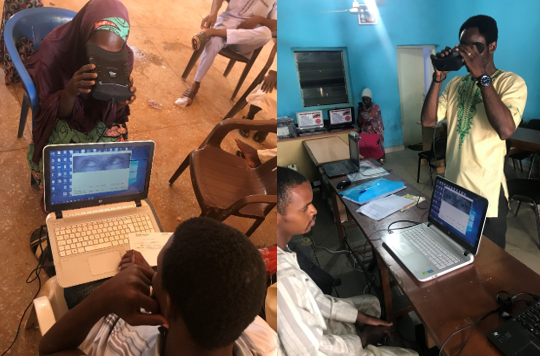
Trust also means knowing who a benchmark leaves out. CASIA-Face-Africa and CASIA-Iris-Africa exist so error rates can be measured on African cohorts instead of assumed from other populations.
- Two U.S. patents on federated learning, issued October 2024
- IJCV 2024 artificial immune system for secure face recognition
- Demographic datasets for iris and face