
Iris
Iris Recognition
The full iris pipeline, from segmentation and encoding to recognition when the eye is moving, distant, or only partly open.
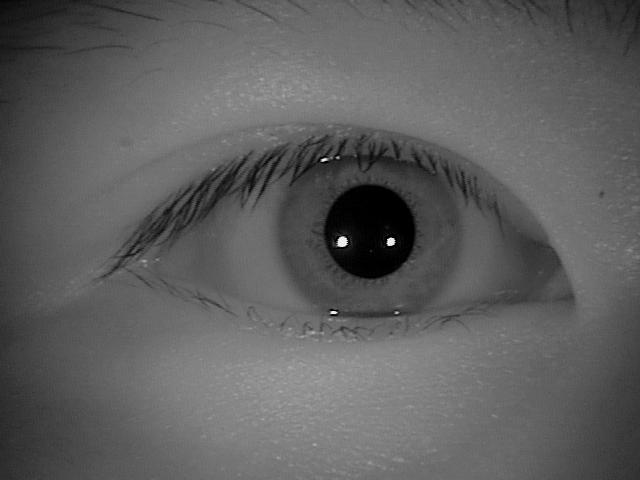
Iris recognition remains the center of the group. An iris carries a stable, highly individual texture, and it can be imaged without touching the sensor. The practical difficulty is no longer the cooperative close-range case. It is recognition while a person walks, blinks, looks away, or stands several meters from the camera.
Recent work treats that setting directly. Sequence models use a short near-infrared video instead of one still frame, so a high-throughput gate can keep accuracy without stopping the person. Segmentation models estimate their own uncertainty when eyelids, glasses, or off-angle gaze hide part of the iris. Transformer encoders and dense uncertainty embeddings are used when a single hand-crafted code is not enough.
The group also releases the data those models need: CASIA-IrisV4, the less-cooperative CASIA-Iris-Degradation set, CASIA-Iris-Africa for demographic studies, and a blur benchmark for iris at a distance.
- High-throughput recognition from near-infrared sequences (IEEE TIFS 2025)
- Uncertainty-aware iris segmentation (IEEE TIFS 2025)
- IrisFormer, a transformer built for iris codes (IEEE SPL 2025)